Illegal Soccer Map Rotation Guide
All four maps in Illegal Soccer — pitch layouts, ring positions, and how the environment shapes your strategy.
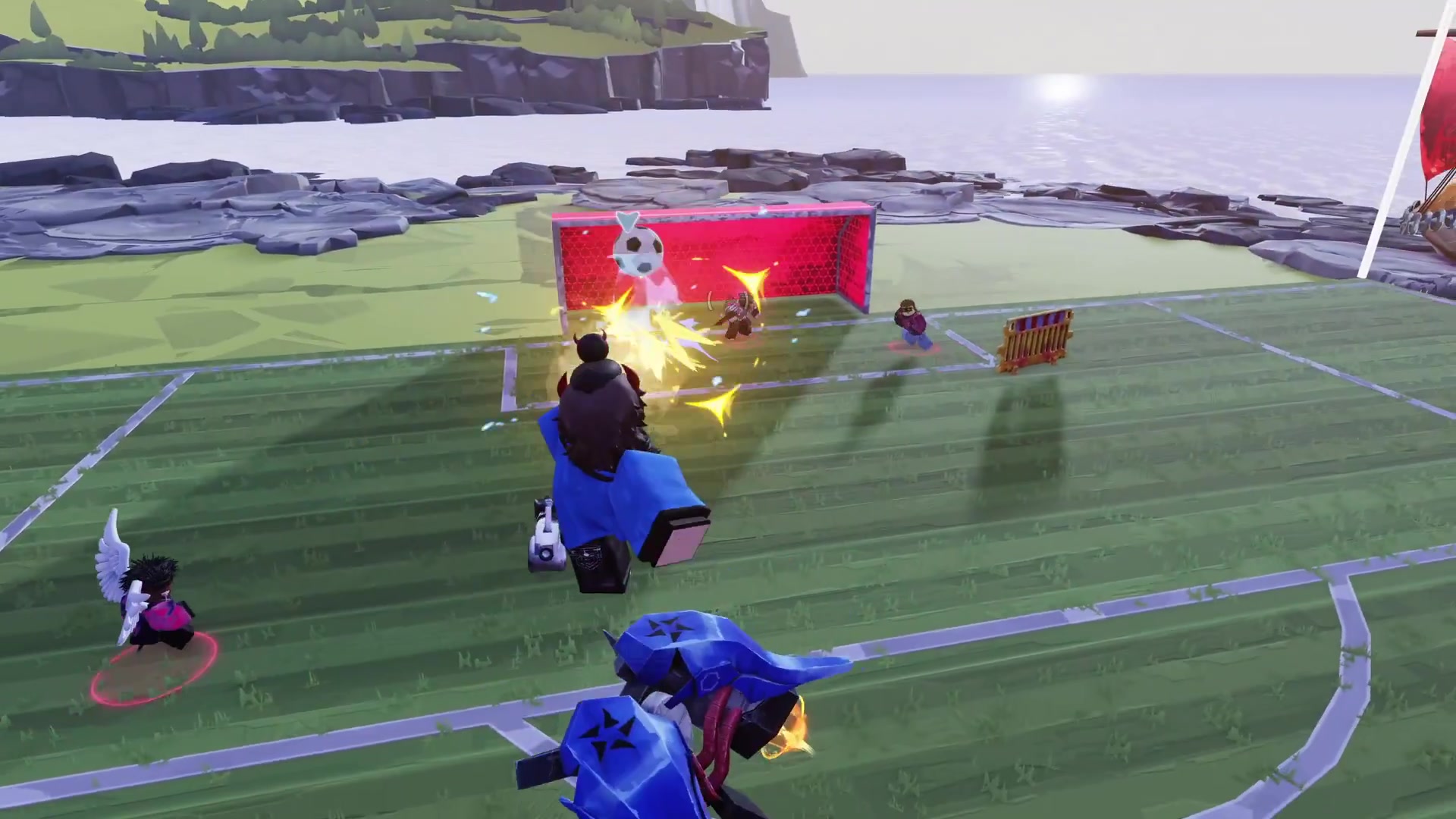
Illegal Soccer currently features four maps that rotate through the matchmaking queue. Each map has distinct geometry that changes how you position, rotate, and shoot. Understanding these differences is not optional — it is the difference between a player who adapts and a player who gets confused every time the lighting changes.
How map rotation works
Maps rotate automatically through the queue. You cannot select a specific map in public matches. The game does not show you which map is next before the match loads, so the best preparation is knowing all four well enough that the transition is seamless.
Maps in the current rotation:
- Desert Arena
- Neon Stadium
- Dusty Pitch
- Coastal Fortress
Each map has a different theme, lighting, and geometry. They are not cosmetic swaps — the ring positions, goal spacing, and wall heights are all tuned per map.
Desert Arena
Desert Arena is the most common map in the rotation. It is also the most mid-range friendly because the sightlines are long and the goals are relatively far apart.
Geometry
- Large open pitch with low walls on the sides
- Central ring spawns in the exact center
- Goals are spaced far apart — approximately 30 seconds of sprint between them
- Minimal obstacles in the midfield
How it plays
The open geometry rewards players who can shoot at distance. Strikers have time to set up shots because chaos players have more space to patrol. The long sightlines mean you can see the ball carrier from further away, but the ball is also harder to pin down because there are no walls to force bad decisions.
Key tip: The desert lighting compresses depth perception. The ball is always further than it looks. Carry before you shoot.
Meta impact: Chaos is strong on this map because there is room to run and pressure. Strikers need to be patient and wait for the ball to come to them rather than chasing.
Neon Stadium
Neon Stadium is the fastest map in the current rotation. Bright lighting, tight corridors, and fast respawns make every second count.
Geometry
- Narrower pitch with higher side walls
- Ring spawns are offset — not perfectly centered
- Goals are closer together — approximately 20 seconds of sprint between them
- Multiple raised platforms near the midfield that block low-angle shots
How it plays
Tight geometry means less running and more positioning. The high walls make it harder to hoof the ball out of play, which keeps possession inside the match longer. Chaos players can cover more of the pitch because it is smaller, which means there is less space to operate in.
Key tip: The neon lighting is actually easier on depth perception than desert. You can shoot more confidently at apparent distance because you are less likely to misjudge the ball.
Meta impact: Keeper is more impactful on this map because the goal spacing is short and saves are easier to set up. Chaos players should focus on lane denial rather than chasing carriers.
Dusty Pitch
Dusty Pitch is the most defensive map in the rotation. Dim lighting, rough terrain, and tight goal spacing create a grind-it-out atmosphere.
Geometry
- Medium-sized pitch with uneven terrain (cosmetic)
- Ring spawns slightly favor one side — not balanced
- Goals are close together — approximately 18 seconds of sprint between them
- Multiple low obstacles near the arcs that block movement
How it plays
Close goal spacing means the game feels faster even though the pitch is not the smallest. The dim lighting makes it harder to track the ball at distance, which favors players who stay close to the action. The uneven terrain is purely cosmetic and does not affect movement or ball physics.
Key tip: Stay closer to the ball on this map. The dim lighting makes long-range shots unreliable. Play the lanes and force 50-50s.
Meta impact: Striker is strong when the ball is in the final third because the goal is close and the lighting makes saves harder. Chaos should focus on getting the ball to the striker rather than trying to score themselves.
Coastal Fortress
Coastal Fortress is the most unique map in the rotation. It has water hazards, elevated goals, and the most complex geometry of any map.
Geometry
- Large pitch with a central water feature that players cannot walk through
- Goals are on elevated platforms — not ground level
- Ring spawns are on stable land only
- Multiple jump pads near the water edge that allow fast crossing
How it plays
The water feature splits the pitch into two halves. Crossing requires using jump pads, which takes 2-3 seconds and leaves you exposed. This means possession is harder to lose but also harder to convert because the enemy goal is elevated and requires adjusted shooting angles.
Key tip: Do not try to carry across the water. Use the jump pads and accept the 2-second crossing time. A carried ball dropped in water is lost.
Meta impact: This map rewards coordinated teams because the split geometry punishes solo play. If you are in a solo queue, focus on your side of the map and do not overextend across the water.
Map-specific strategy adjustments
When the map changes
- Glance at the ring positions before sprinting to your role
- Note the goal spacing — adjust how far you are willing to carry the ball
- Check the lighting — dim maps require closer play, bright maps allow confident shooting
- Scan for unique geometry — platforms, water, obstacles — that changes the flow
Cross-map principles
- Ring positions always determine safe shooting targets — learn them quickly on each map
- Goal spacing determines how long a counter-attack takes — adjust your rotations accordingly
- Lighting affects depth perception — carry before shooting on desert and Dusty Pitch
Which map is best for each role
Striker
- Best maps: Dusty Pitch (close goals, dim lighting), Coastal Fortress (elevated goals, harder saves)
- Worst map: Neon Stadium (tight geometry, fast chaos pressure)
Chaos
- Best maps: Desert Arena (room to run), Neon Stadium (small space, high pressure)
- Worst map: Coastal Fortress (split geometry limits patrol routes)
Keeper
- Best maps: Neon Stadium (close goals, easy setup), Coastal Fortress (elevated goals, clear angles)
- Worst map: Desert Arena (long distances, open sightlines)
Preparing for map rotation in a series
If you are playing in a competitive series or a long session, note which maps favor your playstyle and prepare to adjust. The goal is to be equally comfortable on all four maps so that the rotation never works against you.
Frequently Asked Questions
Quick answers for codes, gadgets, and chaotic matches.
How many maps are in Illegal Soccer?
There are four maps in the current rotation: Desert Arena, Neon Stadium, Dusty Pitch, and Coastal Fortress.
Which map is best for strikers?
Strikers perform best on Dusty Pitch (close goals, dim lighting) and Coastal Fortress (elevated goals, harder saves).
What is unique about Coastal Fortress?
Coastal Fortress has a water feature that splits the pitch in half. Crossing requires jump pads and the goals are on elevated platforms.
How does lighting affect gameplay?
Desert and Dusty Pitch have dimmer lighting that compresses depth perception. Neon Stadium is bright and easier to shoot at distance.
Can I choose which map to play?
No, maps rotate automatically through the matchmaking queue. You cannot select a specific map in public matches.