Curved Kicks in Illegal Soccer
Bend shots around defenders using the curve mechanic — the secret to scoring past tight defenses.
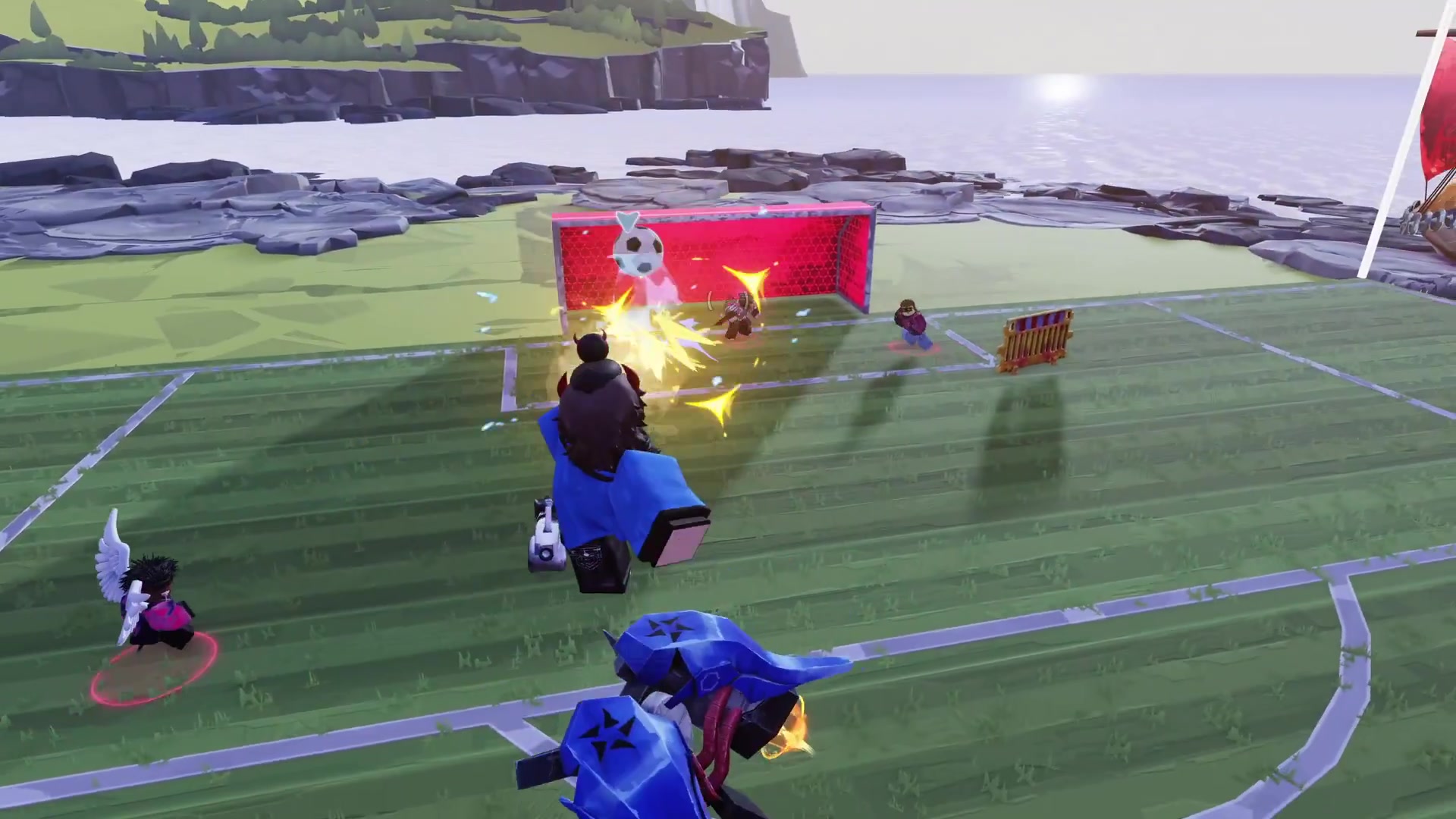
Curved kicks are one of Illegal Soccer’s signature mechanics. Unlike a straight power shot, a curved kick bends around defenders and can reach parts of the goal that a direct line cannot. This guide covers the physics, the inputs, and when to prioritize curve over power.
What is a curved kick?
A curved kick uses spin to alter the ball’s trajectory mid-flight. The ball starts in one direction, then curves based on the spin applied at the moment of contact. This makes it possible to shoot around a wall of defenders or bend the ball into the far post from a narrow angle.
When to use curved kicks
Curved kicks are most effective when:
- A defender or defensive wall is between you and the goal
- You are at a narrow angle where a straight shot would hit the near post or go wide
- The keeper is positioned to block a direct shot but has a weaker side
- You want to place the ball rather than blast it
Curved kicks are NOT the answer when:
- You have a clear, unobstructed path to the goal — power may be faster
- You are under immediate pressure and need to shoot quickly
- The curve would send the ball out of bounds
How to execute a curved kick
The exact input varies based on client, but the principle is consistent: apply spin at the moment of the kick by combining a direction input with the kick button.
PC: Hold the kick button and simultaneously input a direction perpendicular to your shot direction. The ball will curve in that direction.
Mobile: The gesture-based controls allow for swipe-based spin application. Swipe perpendicular to your shot direction after the kick prompt appears.
Curve versus power: the decision tree
Before every shot, make this quick assessment:
- Is there a clear line to the goal? → Use a power shot.
- Is a defender blocking the direct path? → Use curve.
- Am I at a very narrow angle? → Curve to bend it around the near post.
- Is the keeper off-center? → Curve toward the vacated side.
Training drill: curve consistency
Practice curved kicks in an empty lobby or low-pressure match:
- Position yourself at a 45-degree angle to the goal
- Aim for the far post using a curved kick
- Repeat 10 times, adjusting the curve intensity
- Track how many hit the target area
The goal is not power — it is placement. A轻轻 curved kick that hits the corner is worth more than a hard straight shot that the keeper saves.
Combining curve with gadgets
Curved kicks pair exceptionally well with gadget setups:
- Jetpack users can achieve steep angles, then curve the ball into the vacated far post
- Grapple users can swing around the defender and release into a curved finishing shot
- Chaos players can use the distraction to line up a curved shot while the keeper is occupied
Common mistakes
Over-curving: Beginners often apply too much spin, sending the ball out of play or into a dangerous counter.
Using curve when power is cleaner: If you have a clear lane, do not add unnecessary curve.
Ignoring the keeper’s positioning: A curved kick to the keeper’s strong side is wasted. Read the keeper first.
Master the curved kick and you will score goals that others cannot even attempt. The angle no longer matters when you can bend it around the wall.
Frequently Asked Questions
Quick answers for codes, gadgets, and chaotic matches.
What is a curved kick?
A kick that uses spin to bend the ball's trajectory mid-flight, allowing you to shoot around defenders.
When should I use curved kicks?
Use them when defenders block the direct path, when you are at a narrow angle, or when the keeper is positioned away from one side.
Is curved kick better than power shot?
Not always. Power shots are faster and better when you have a clear line. Curve is for placement around obstacles.
Can I combine curved kicks with jetpacks?
Yes. Jetpack users can achieve steep angles and use curve to bend the ball into the far post.